

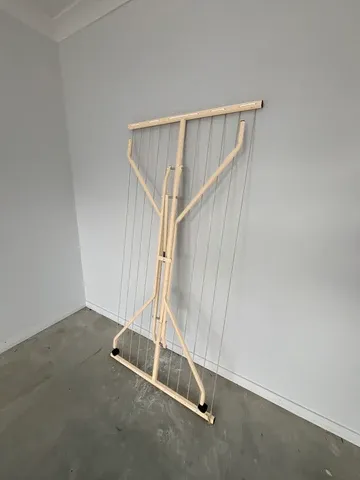
A permanent clothesline works well when a household has a dedicated laundry area and no plans to change it. Renters, apartment residents and people downsizing into smaller homes often face a different situation. They may have limited outdoor space, restrictions on drilling into walls, or a balcony that needs to remain useful for more than washing.
In these homes, flexibility can be more valuable than maximum capacity. A drying setup that can move between locations, fold away and travel to another property can solve everyday laundry problems without requiring permanent changes.
Check the Property Before Buying Anything
Rental homes can come with rules about altering walls, balconies and outdoor areas. Even when there appears to be a convenient place for a fixed clothesline, installing one may require permission.
Start by checking the tenancy conditions and looking closely at the available space. Measure balconies, patios and indoor areas where washing might occasionally need to dry.
This prevents buying equipment that either cannot be installed or makes an already small area difficult to use.
Make Indoor Drying More Practical
Wet weather can be particularly inconvenient in an apartment where there is no large covered outdoor area. An indoor portable clothes line provides a way to create temporary drying space without permanently turning a room into a laundry zone.
Placement still matters. Choose an area with suitable ventilation and leave reasonable gaps between damp garments instead of packing everything together.
Once the washing is dry, being able to fold and store the equipment allows the room to return to its normal purpose. That can make a significant difference in a compact home.
Measure the Clothesline When It Is Folded
Open dimensions naturally receive most of the attention while shopping, but renters should also check how much space the product occupies between washing days.
A portable frame that folds neatly into a suitable storage spot can be convenient. One that blocks a hallway or requires rearranging a cupboard every time it is stored may quickly become frustrating.
Before ordering, choose the storage location. Measure it and compare those dimensions with the folded product rather than assuming it will fit somewhere later.
Let One Setup Work in Different Places
An outdoor portable clothes line can be useful when a household has access to a balcony, patio or courtyard but does not want the drying area permanently occupied.
On a clear day, washing can be placed outside where conditions are suitable. When the area is needed for seating or entertaining, the frame can be moved after the clothes are dry.
This ability to change locations also helps when sunlight shifts during the year. The drying setup does not have to remain tied to one shaded corner.
Think About Your Next Home Too
Renters often buy household items for the property they occupy now, even though another move may happen a year or two later.
A permanently installed solution may suit the current balcony perfectly but have little value after moving. Portable equipment is easier to take along, although its dimensions should still be sensible enough to work in different types of homes.
Downsizers can think similarly. Choosing adaptable equipment reduces the need to predict exactly how future laundry space will be arranged.
Do Not Forget the Washing Itself
Flexibility does not eliminate the need for enough usable line space. Think about the items normally washed rather than focusing only on the convenience of moving the frame.
Someone living alone may need modest capacity for everyday clothing and towels. A couple could require additional room for bedding, while a small family may need several loads drying during a busy weekend.
Choose enough capacity for regular use without buying such a large frame that moving and storing it becomes difficult.
Keep Movement Safe and Simple
A portable clothesline is most useful when moving it does not become a project.
Check door widths, balcony thresholds, steps and furniture between likely drying locations. Avoid trying to move a heavily loaded frame through awkward spaces if the product is not designed for that use.
Planning the route helps portability remain an advantage rather than another household chore.
Conclusion
Renters rarely know whether their next home will have a large courtyard, a narrow balcony or no private outdoor drying area at all. That uncertainty changes what makes a clothesline useful.
A solution that can adapt to the current property and leave with the household may offer more lasting value than one designed around a single wall or corner. The portable options available through balconyclothesline.com.au can be compared with both today’s available space and the possibility of tomorrow’s move.