

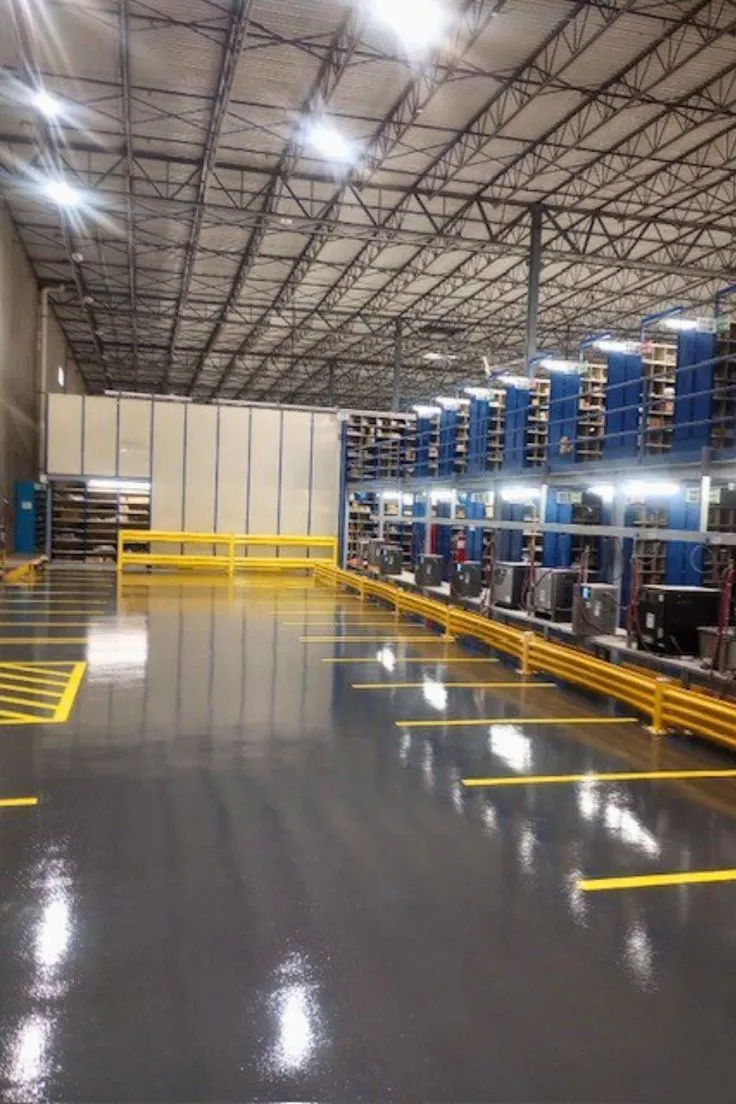
Battery-charging areas occupy only a small part of many warehouses, yet they can place unusually concentrated demands on the floor. Forklifts arrive repeatedly, operators turn and park in the same locations, and charging equipment introduces risks that differ from ordinary storage aisles. Depending on the battery technology and facility setup, these zones may also encounter corrosive electrolyte, moisture, and maintenance activity. Treating the charging area as a separate flooring environment helps managers plan protection around its actual exposure.
Battery Zones Concentrate Traffic
Forklift travel through a warehouse is distributed across long aisles, but charging activity focuses vehicles into a relatively small footprint. Trucks approach the same stations, turn into position, stop, and leave throughout the day.
That repeated maneuvering creates abrasion and lateral stress, especially near station entrances and turning points. Heavy vehicle loads can also expose weak joints, patches, or cracks sooner than in lightly used areas.
Managers should map these movements before resurfacing so the specification reflects more than overall warehouse traffic.
Chemical Exposure Changes the Requirement
Traditional lead-acid battery operations can introduce sulfuric acid if electrolyte is spilled during maintenance or charging. Even where spills are uncommon, corrosive exposure should be considered when selecting the resin system.
An Industrial Epoxy Flooring Contractor In Nj should be told what battery systems are used, which maintenance products are present, and how spills are handled. Different resin chemistries provide different levels of chemical resistance, so the specification should be based on realistic exposure rather than a generic warehouse coating.
Concrete Condition Matters at Stations
Charging stations are often located in areas used for years. Existing concrete may contain old coatings, tire residue, previous patches, cracks, or contamination from maintenance activity.
Before a new resinous system is installed, the substrate should be assessed and mechanically prepared. Grinding or shot blasting can remove unsuitable material and create a suitable profile for bonding.
Damaged joints and spalled concrete should be repaired first, especially where forklift wheels cross them repeatedly.
Containment and Housekeeping Work Together
Flooring is only one part of managing a battery-charging area. Spill-control procedures, suitable containment, ventilation, equipment maintenance, and employee practices all contribute to safe operation.
A chemical-resistant surface can make cleanup easier by limiting direct absorption into porous concrete, but it should not replace established spill-response procedures. Keeping abrasive dirt and grit away from turning areas can also reduce unnecessary wear beneath forklift tires.
Texture Needs a Practical Balance
Charging areas may become wet during cleaning or maintenance, so traction can be important. However, extremely rough flooring can make chemical cleanup harder because liquids and residue can settle into a deep surface profile.
The practical objective is to balance traction with cleanability. Employee footwear, spill risk, cleaning methods, and vehicle movement should all influence the selected texture.
System Design Should Match the Risk
Facilities researching Warehouse Resin Flooring In Nj should distinguish between ordinary traffic resistance and specialized chemical protection. High-solids epoxy systems can be designed for heavy forklift use, while chemically demanding areas may require specialty resin chemistry or additional protective layers.
The contractor should explain why each layer is included and how the proposed system addresses impact, abrasion, chemical exposure, and cleaning. This makes it easier to understand why a small charging area may require a different specification from a large open aisle.
Marking Can Improve Organization
Floor renovation also provides an opportunity to define charging positions, pedestrian routes, restricted zones, and emergency access visually.
Clear markings can help keep parked vehicles within designated spaces and prevent stored materials from blocking charging equipment or spill-control resources. The layout should be planned before final striping so it corresponds with actual vehicle movement.
Inspect the Area More Often
Because charging zones combine concentrated traffic and specialized exposure, they deserve more frequent inspection than low-use warehouse sections.
Managers should watch for worn turning areas, damaged joints, chips near equipment bases, chemical staining, and changes around cracks or patches. Small defects are easier to repair before repeated vehicle movement or spills enlarge them.
Conclusion
Forklift battery-charging areas should not be treated as ordinary warehouse floor space. Concentrated vehicle movement, possible corrosive exposure, equipment maintenance, cleaning, and spill-response requirements create a distinct operating environment.
A better flooring strategy begins by identifying battery technology, traffic patterns, substrate condition, chemical risk, and cleaning procedures. Mechanical preparation, suitable resin chemistry, practical texture, clear markings, and routine inspection can then be combined into a system matched to the zone. Designing around the specific demands of charging operations can help protect vulnerable concrete while supporting more organized day-to-day warehouse activity.