

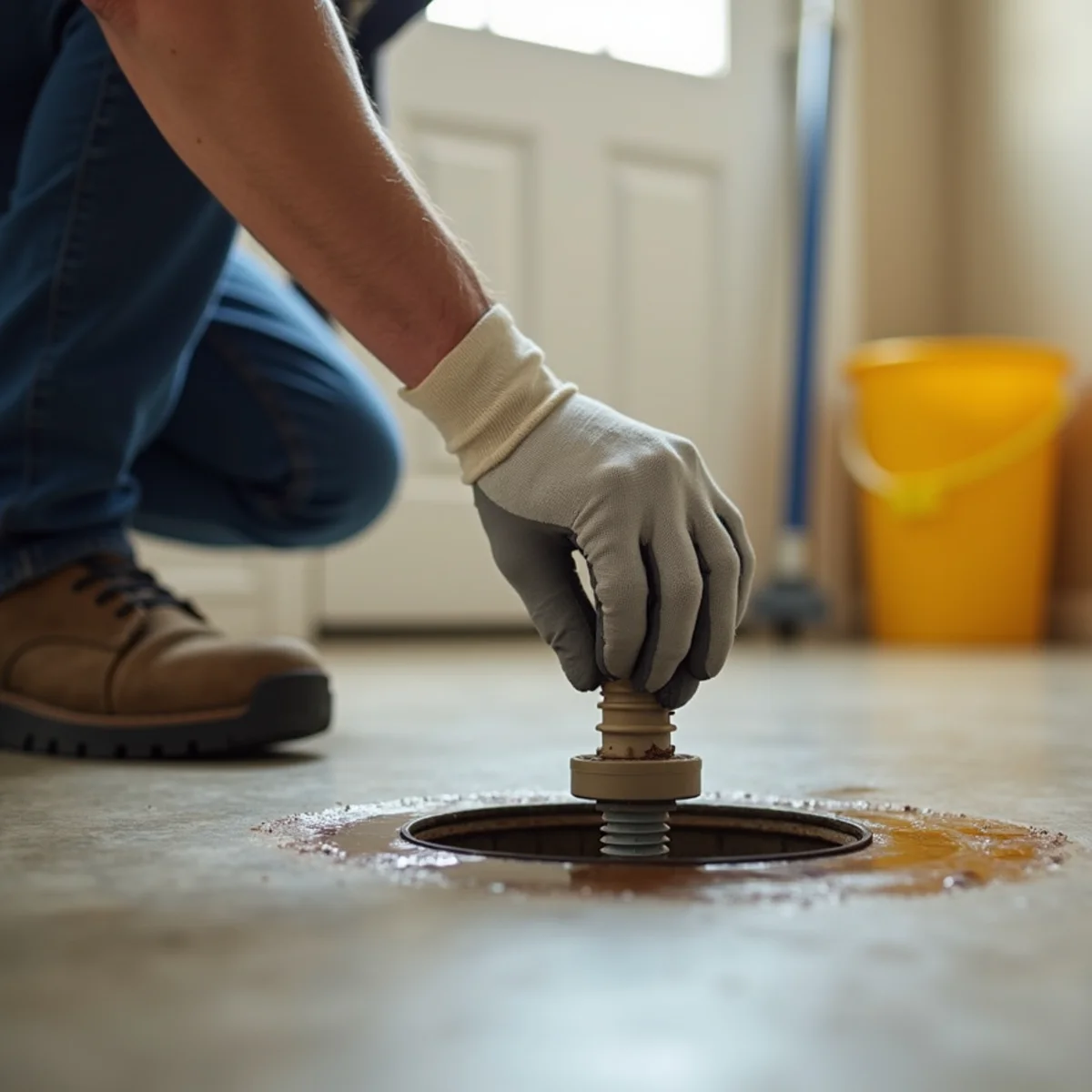
Sewage coming up through a shower, floor waste or toilet changes the priority immediately. This is no longer a slow drain that can wait until the weekend. The aim is to stop more wastewater entering the affected area, keep people away from contamination and prevent a plumbing failure from becoming a much larger clean-up job.
The difficult part is that people often react by testing the system. They flush again, run a tap or empty a sink to see whether the blockage has moved. When the main drain is restricted, every extra litre can feed the backup.
If wastewater is already inside, stop using the drainage system, control access to the area and arrange professional help.
First, stop sending water toward the blockage
Turn off taps and avoid using toilets, showers, baths, the dishwasher and washing machine. If several people are home, tell everyone what is happening so somebody does not unknowingly flush a toilet upstairs while you are dealing with the overflow below.
You usually do not need to turn off the property’s entire water supply for a sewer blockage unless there is another leak or a plumber advises it. The important step is to stop fixtures and appliances from discharging wastewater into the blocked line.
If the backup slows once water use stops, leave it alone rather than testing with more water.
A blocked sewer plumber, homeowners call will get more useful information from the sequence of symptoms than from repeated DIY testing.
Treat sewage as contaminated material
Wastewater can contain bacteria, viruses and other microorganisms. Avoid direct contact, and keep children and pets out of the affected room.
If sewage has spread across flooring, do not walk through it unnecessarily and then move around the rest of the home. That can carry contamination into clean areas. Close doors where practical and prevent people from entering until the plumbing fault has been controlled and the space can be cleaned safely.
Do not handle sewage with bare hands. If water is near electrical appliances, power points or exposed electrical equipment, stay clear of the hazard. Water and electricity create a separate safety risk that should not be treated as part of an ordinary drain clean-up.
Work out which fixtures are involved without forcing more water through them
You can still make useful observations.
Where did the sewage first appear? A ground-floor shower or floor waste is often one of the lowest openings in the drainage system. Did the toilet become difficult to flush earlier in the day? Were there gurgling sounds? Did another drain slow down before the overflow?
If only one fixture is affected and everything else behaves normally, a local branch blockage is possible. If several toilets, showers or sinks are involved, the restriction may be further downstream in the property’s main sewer.
From a safe position, also check whether an outside relief gully is overflowing. That can indicate the main line has lost substantial capacity.
Protect what you can without entering the contaminated area
If clean belongings are close to the edge of the affected zone and can be moved without stepping through sewage, relocate them. Keep unaffected doors closed and stop foot traffic through the area.
Take photographs from a safe position to record where the overflow occurred and what was affected.
Avoid pouring bleach, disinfectant or drain chemicals into a fixture while the sewer is still blocked. Chemicals do not repair a collapsed pipe, remove a deep root mass or create capacity in a fully restricted main line. They can also leave hazardous liquid sitting in the drain for the plumber to encounter.
If you rent the property, report the problem promptly. In Victoria, a blocked or broken toilet system and flooding or serious flood damage are classed as urgent repairs. That does not mean every slow drain is an emergency, but sewage backing up inside the home clearly deserves immediate attention.
What the plumber needs to solve first
The first task is to restore safe flow. A blocked sewer plumber may access the drain through an inspection opening, relief point or another suitable location, then use clearing equipment appropriate to the obstruction and pipe condition.
Mechanical cables can help with some local obstructions. High-pressure water jetting may be used for heavy deposits, sludge or roots where the line is suitable. Once flow is restored, the next question is why the sewer blocked.
A one-off foreign object in otherwise sound pipework is different from roots entering through a cracked joint. A section with poor fall may repeatedly collect waste. A displaced or damaged pipe can catch material again even after the immediate blockage is removed.
Where the cause is unclear or the problem has happened before, CCTV inspection can show what remains inside the line after clearing.
Cleaning comes after the drainage is under control
Once the plumber confirms that the drainage system is operating and there is no continuing overflow, the affected area can be cleaned and disinfected appropriately.
Materials that absorb sewage can be difficult to restore. Carpet, underlay, soft furnishings, plasterboard and some cabinetry may need specialist assessment depending on the extent and duration of contamination. Hard surfaces can usually be cleaned and disinfected more effectively.
For a small contained incident, follow Victorian public-health guidance for protective equipment and disinfection. For widespread contamination, porous materials or sewage that has entered wall cavities or subfloors, professional remediation may be the more sensible option.
Do not rush to make the room look clean while moisture and contamination remain hidden underneath finishes.
After the emergency, find out why it happened
When the house is usable again, ask what was found in the drain and whether the pipe itself is sound.
If the plumber removed wipes or another obvious object and the camera shows a clear, intact sewer, the event may be isolated. If roots, cracks, displaced joints or standing wastewater are visible, there may be a repair decision to make.
That follow-up is what prevents an emergency callout from becoming a recurring routine.
A sewage backup brings plumbing, contamination and property damage at once. Handle them in order: stop water use, keep people away, restore the drain, then clean and repair the affected area.
The less additional wastewater you send toward a blocked sewer in those first few minutes, the better chance you have of keeping a bad situation contained.