

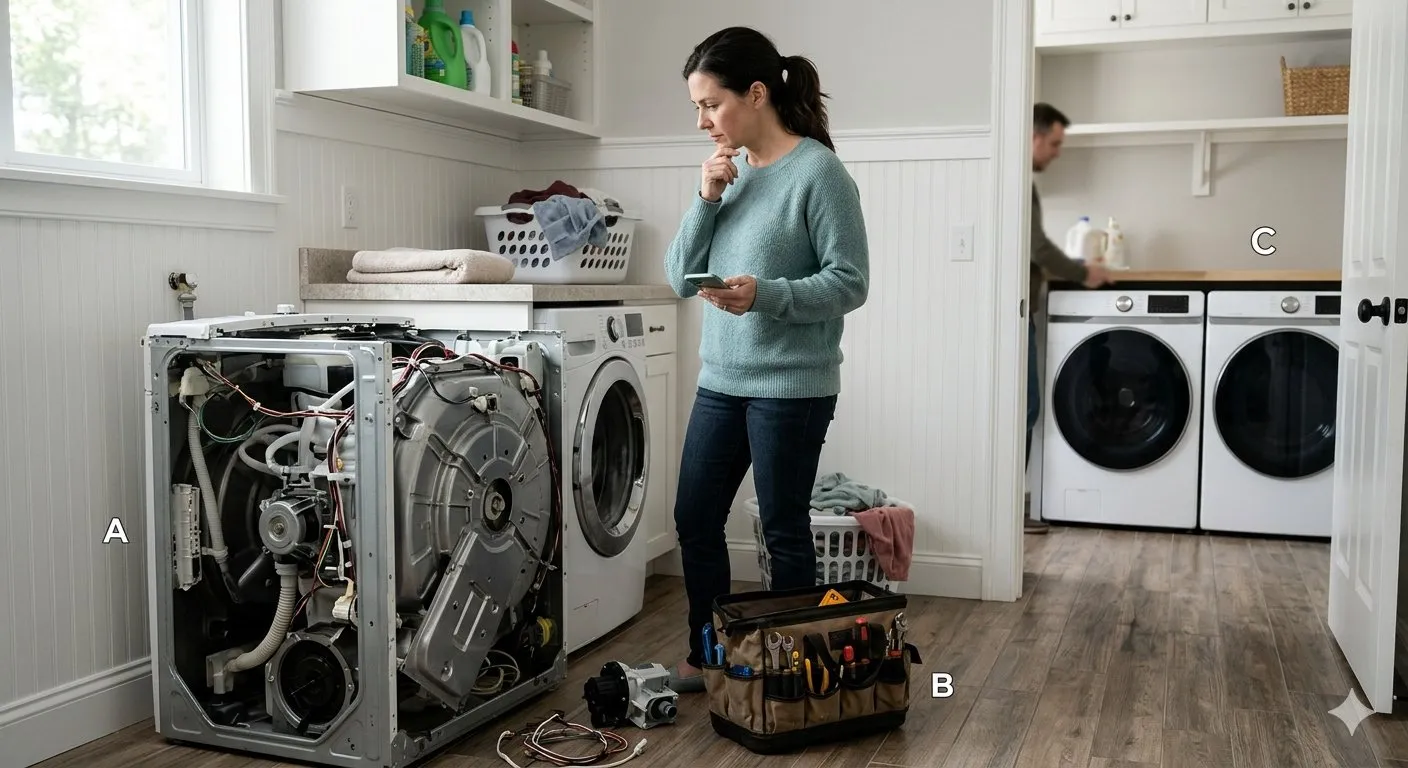
Few household moments feel as stressful as a refrigerator warming up or a washer flooding the floor. In that panic, people often replace machines that only needed a small part, or they pour money into units that were already finished. A structured approach removes emotion from the decision. By weighing age, repair cost, safety, and future reliability, you can choose with confidence. The following framework helps homeowners and renters think through the options calmly before spending anything at all on parts or labor.
The Fifty Percent Guideline
A widely used rule suggests replacing an appliance when the repair estimate exceeds half the price of a comparable new unit. It is not perfect, but it creates a useful boundary. A one-hundred-fifty-dollar fix on a washer worth six hundred makes sense. A five-hundred-dollar compressor repair on an aging refrigerator probably does not. Use the guideline as a starting point, then adjust it by considering the machine’s age, condition, and how essential it is to daily life. Context always matters.
Age Against Typical Lifespan
Most refrigerators last around thirteen years, washers and dryers roughly ten to thirteen, and dishwashers closer to nine, though maintenance changes the picture. A seven-year-old dryer needing a heating element is a fine candidate for repair. A fifteen-year-old unit needing a major component is reaching the end. Look at the manufacturing date on the rating plate. When a machine has passed its expected lifespan, even a modest repair buys limited time, so budget for a replacement soon. Dates tell a surprising story.
Early Warning Signs Worth Noticing
Appliances usually complain before they quit. A refrigerator that runs constantly, a dryer taking two cycles to finish, an oven that heats unevenly, or a washer that vibrates harder each week signals something developing. New noises, rising utility bills, and odd smells matter too. Addressing these hints early often keeps repairs minor and inexpensive. Waiting until total failure raises costs through secondary damage, spoiled food, or water leaks. Keep notes on when symptoms started so a technician can diagnose faster.
What a Diagnostic Visit Reveals
Quality Appliance Repair Concord NC visits do more than name the broken part. The technician tests related components, checks wiring, and estimates how long the rest of the machine may last. Ask for a written quote listing parts, labor, and any warranty on the work. Clarify whether the diagnostic fee is applied toward the repair. Good technicians explain options plainly, including recommending replacement when repair would be wasteful. That honesty is a sign you are dealing with someone who values long-term trust.
Parts Availability and Brand Factors
Some manufacturers support their products for decades, while others discontinue parts within a few years. Before approving a repair, confirm the part can be obtained quickly and at a reasonable price. Delays of several weeks can be more disruptive than the repair itself. Common brands with large installed bases usually have deep parts pipelines. Rare or imported models might not. This factor often tips the decision, especially for older units where the expected remaining value is already limited. Ask early to avoid surprises.
Safety Problems That End the Debate
Certain symptoms should override every cost calculation. A gas smell, sparking outlet, scorched wiring, burning odor from a dryer, or water near electrical components requires immediate shutdown. Disconnect power, close the gas valve if safe to do so, and call a qualified professional. Do not experiment with homemade fixes on these issues. Repairing a safety-related fault properly may be worthwhile on a good machine, but replacing a compromised older unit is sometimes the wiser and safer path overall. Caution costs far less than injury.
Planning the Next Purchase Early
Even when repairing, think ahead. Measure the space, note the fuel type, and record model numbers so a replacement can be sourced quickly if the repair fails. Watch for seasonal sales and consider pre-owned units that offer solid value. Being prepared prevents rushed decisions made during an emergency. Keep service receipts organized, since a documented repair history can raise resale value and help you decide when the machine truly reaches the end of its useful life. Preparation lowers stress considerably.
Choosing the Next Step
Smart decisions blend numbers with common sense: compare costs, respect age, and never ignore safety. When a trusted local expert can inspect the problem and explain choices plainly, the process feels manageable. For dependable support with this kind of work, ask for a clear written estimate before agreeing to anything. TV Mount Charlotte serves nearby households with practical diagnostics, fair pricing, and honest recommendations, whether that means a quick fix or guidance toward a better replacement. Clarity makes the decision easier.