

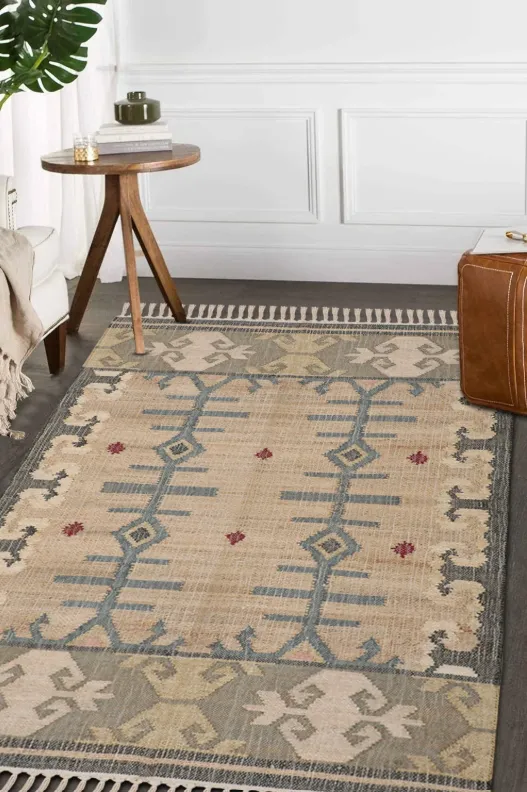
Most people shopping for rugs for living room start with one question: “Which design will look good with my sofa?”
That is not the best question. The more useful question is: “What is currently wrong with my living room, and can a rug fix it?”
Because a handmade rug can do very different jobs in different homes. In one room, it needs to connect a large sofa and two chairs that look completely disconnected. In another, it needs to soften a room full of marble and glass. In a small apartment, it may need to define the seating area without making the room feel crowded. And in a family home, it may simply need to survive dust, guests, children, and daily use without becoming a maintenance project.
That is the real content gap in most rug guides. They treat every living room as a styling project. But Indian living rooms are used very differently.
Some are formal guest rooms. Some are TV rooms. Some have people sitting on the floor during family gatherings. Some open directly into balconies. Some have a 3+2 sofa set that cannot be moved. Some have one oversized L-shaped sofa taking up half the room.
So no, there is no single “best rug for living room”.
Should You Buy a Rug Before or After Choosing a Sofa?
Ideally, plan the sofa and rug together. But if your sofa is already fixed, choose the rug around the sofa layout rather than trying to match its colour.
This matters because the sofa determines how the room is physically used, while the rug can influence the colour, texture and overall mood.
If you are furnishing a new living room from scratch, current design advice is split on whether the sofa or rug should be bought first. However, designers broadly agree that both should be considered together because the room’s layout, scale and function matter more than choosing either item in isolation.
Choose the sofa first when:
- Comfort is your highest priority.
- You have a fixed room layout.
- You are investing heavily in a long-term sofa.
- The family spends several hours sitting on it every day.
- The sofa is the largest functional decision in the room.
Consider the rug early when:
- You want the area rug to be the main colour or pattern source.
- Your furniture is already neutral.
- You are building the room around a handmade statement rug.
- You do not want to search endlessly for a rug after choosing everything else.
The better approach is to decide the room’s layout before buying either. Once you know where the sofa, chairs, and coffee table will sit, you can choose a rug that supports the arrangement.
Key note: A designer rug should not be chosen because it matches the sofa. It should be chosen because both pieces make the room work better together.
How Do You Choose Rugs for Living Room Based on How You Actually Use the Room?
The best living room rug depends on your lifestyle before it depends on your interior style. This sounds obvious, but it is where a lot of buying advice becomes useless.
A couple using a formal living room twice a week can buy differently from a family that spends every evening watching television, eating snacks, and walking in and out of the balcony.
If your living room gets heavy daily use
Prioritise:
- Durable materials.
- Easy-to-manage surfaces.
- Medium or low pile.
- Patterns that are forgiving between cleaning cycles.
- Construction that handles regular foot traffic.
If your living room is mainly for guests
You have more freedom to prioritise:
- Finer details.
- More delicate materials.
- Higher visual impact.
- Lighter colours.
- More elaborate handmade designs.
If your family sits on the floor often
The rug needs to do more than look good.
Consider:
- Comfort underfoot.
- A softer texture.
- A size large enough for actual floor use.
- A surface that is comfortable for children to play on.
If your living room opens towards a balcony
Think seriously about dust and foot traffic before choosing an extremely high-pile or very light rug. Buy the rug for the messiest realistic day in your home, not for the cleanest photograph of your home. That one approach can save you from buying an area rug you love online but regret maintaining later.
Does a Living Room Rug Need to Match the Sofa?
No. In fact, a rug that matches the sofa too perfectly can make the entire living room look flat. This is one of the biggest misunderstandings around living room styling.
A cream sofa does not require a cream rug. A grey sofa does not require a grey rug. And a brown leather sofa certainly does not need another brown surface underneath it.
Instead, look at what the sofa is missing.
If your sofa is plain and neutral
The rug can introduce:
- Pattern.
- Colour.
- Texture.
- Handmade character.
If your sofa is already colourful
The rug can calm the room using:
- Neutral tones.
- Tonal patterns.
- Natural materials.
- Low-contrast designs.
If your sofa and furniture are mismatched
A designer rug can become the connecting element. For example, a carpet containing small amounts of brown, blue and cream can visually connect furniture that otherwise looks unrelated.
Recent design advice increasingly focuses on choosing a rug according to the mood you want to create rather than mechanically matching everything in the room. Colour undertones and the existing lighting also matter because a rug can either ground the space or make it feel visually confused.
Key note: Your rug does not need to match the sofa. It needs to make the sofa look like it belongs in the room.
That is a much more useful styling goal.
What Should You Check Before Buying a Living Room Rug Online?
Before buying online, check the rug against your room’s actual measurements, lighting, and furniture arrangement. Product photographs cannot answer these questions for you.
This is especially important because rugs often look larger or smaller online than they actually feel in a room.
Before ordering, check:
1. Where will the front legs of your seating go?
A rug that visually connects the seating arrangement generally works better than one that floats independently in the centre. Current living-room rug guides consistently emphasise sizing the rug around the furniture arrangement rather than the empty floor area.
2. What does the rug look like in your lighting?
Natural light, warm lighting, and cool lighting can all change the appearance of colour.
3. How much of the rug will actually remain visible?
Do not pay for a large rug only to hide most of it under furniture.
4. Can you maintain the material?
Consider dust, pets, children, food, and how frequently the room is used.
5. What role will the rug play?
Choose one:
- Anchor
- Colour
- Texture
- Comfort
- Room divider
If you cannot identify what the rug is supposed to do, you are probably shopping by appearance alone.
For people looking at handmade options across different living-room styles, Kesari Home offers a useful variety of rugs in different materials, sizes, and design directions, making it easier to choose based on the room rather than forcing every space into one decorating formula.