

Most people choose an interior designer the way they choose a restaurant. They scroll through photos, ask a friend, collect one quote and say yes. For a new home that is a risky way to do it, because the person you pick will decide where your sockets go, what sits behind your wardrobe shutters and how many months you spend paying rent and EMI together.
A new flat is also the best time to get this right. The walls are bare, nothing is fitted yet, and every change costs less now than it will six months from now. So it is worth spending a little time on the hiring itself. These are the eight things I would check before paying anyone an advance.
8 Checks Before You Hire
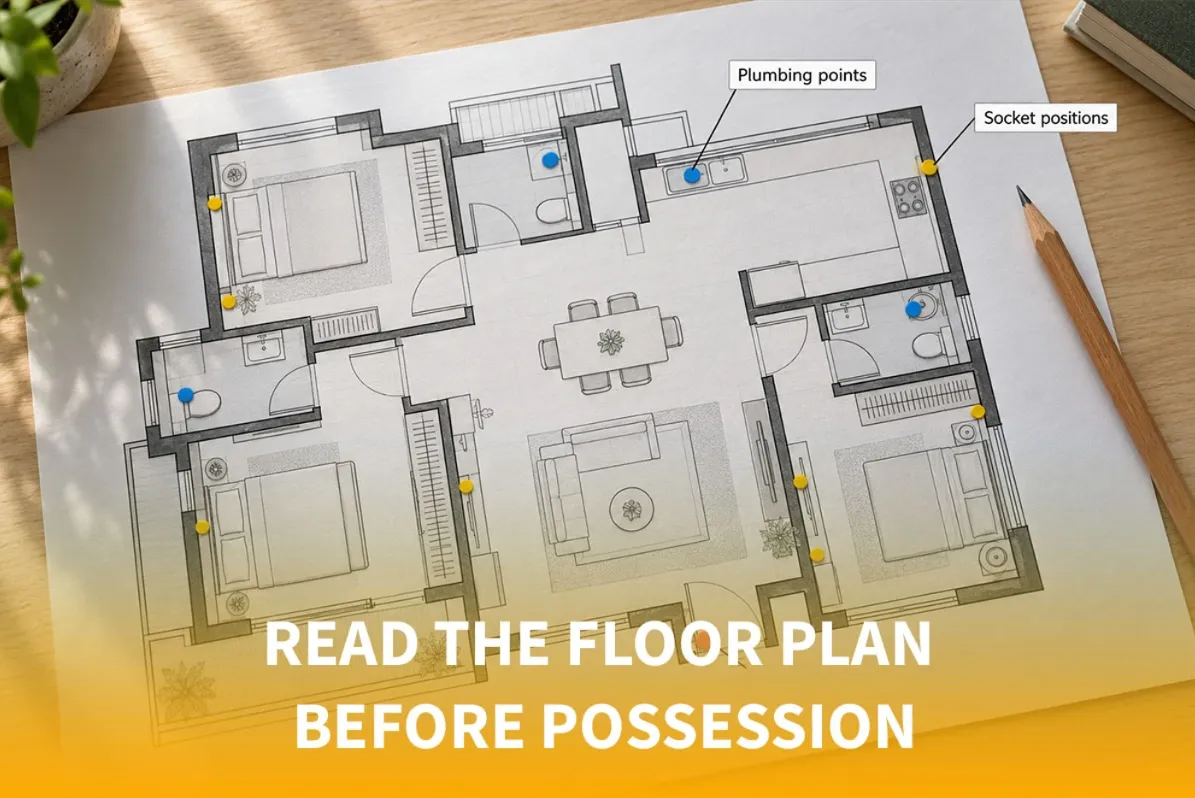
1. Tell them where the flat stands in the handover.
If possession is still a few months away, ask the designer to look at the builder’s floor plan first. A good one will point out changes worth asking for while the walls are still open, like moving a plumbing point or adding sockets where you will actually need them. If you have already taken the keys, ask how they would plan the work around any civil changes. Either way, a designer who gives the same pitch to every client is not looking at your flat.
2. Count the questions they ask before they pitch.
In the first meeting, notice who talks more. A designer who opens with a moodboard or a package price has not understood anything yet. You want to hear questions: how many people live in the home, who cooks, whether anyone works from home, how many pairs of shoes you own, whether you need a pooja space, and how long you plan to stay.
Ask how they would plan the living room too. In most new flats it is the biggest room, and it sets the furniture sizes, the TV wall and the lighting for the rest of the house. Living room interior design in Bangalore is one place to see how a designer approaches it.
They should also ask your budget and tell you honestly when your wish list does not fit it. A designer who says yes to everything will say yes at the quotation stage as well, and you will see the difference in the final bill.
3. Visit a finished home and talk to the owner.
Photos are taken on handover day, when everything looks its best. Ask for the address of a home that was done two or three years ago, ideally one close to the size of yours, and ask if you can speak to the owner. Then put three questions to them. Did the work finish on the date promised? Did the final cost match the quote? What happened when something needed fixing?
Their answers will tell you more than any portfolio. If a designer cannot connect you with a single past client, take that as an answer. For kitchens, you can look at Dezinepro’s modular kitchen design in Bangalore page as one reference point, then ask every other designer on your list to show you the same thing in a home that is being lived in.
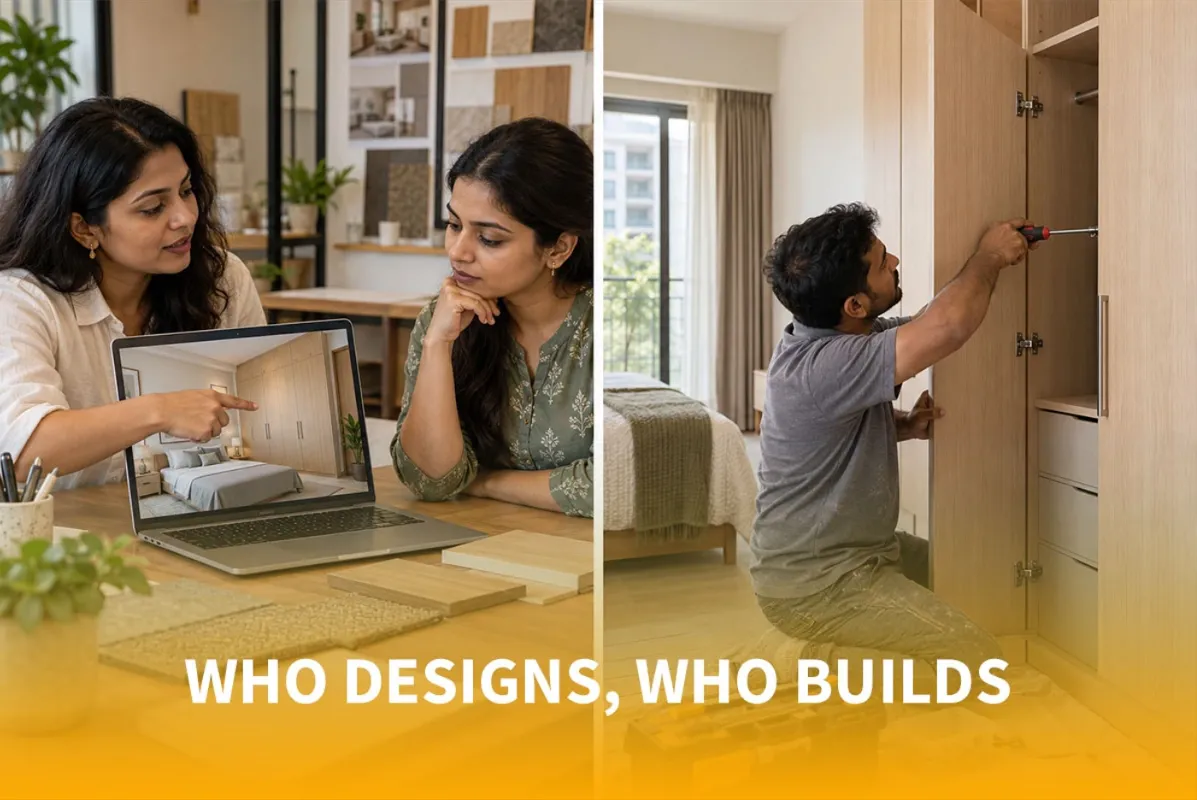
4. Find out who designs and who builds.
Some firms design the home and hand the carpentry to a contractor. Others make the furniture in their own workshop. Neither is wrong, but you should know which one you are dealing with, because it decides who is responsible when a shutter does not fit or a drawer sticks.
Ask where the furniture is made, who is on site every day, and whether that person works for the designer or for the contractor. When the design team, the factory and the site team sit under one roof, you have one person to call. When they do not, problems tend to fall between them.
5. Check the rules of your building.
Many apartment communities in Bangalore have rules for interior work: fixed working hours, permission before work starts, a deposit, limits on using the lift for material, and a place for debris. Some also ask for a list of the workers. Speak to your association first, then ask the designer who will handle this and whether they have worked in your community before. A missed permission can hold up a site for days.
6. Make the quotes comparable.
Two quotes for the same flat can look very far apart and still be for different work. One may include the false ceiling, electrical points and painting, and the other may leave them out. One may price wardrobes with a basic board, the other with a better one.
Before you compare totals, put the quotes side by side and compare what each one covers, room by room. Ask each designer to mark what is excluded and to tell you how a change after approval will be charged. A lower quote with a long list of exclusions is rarely the cheaper one by the time the work is done.
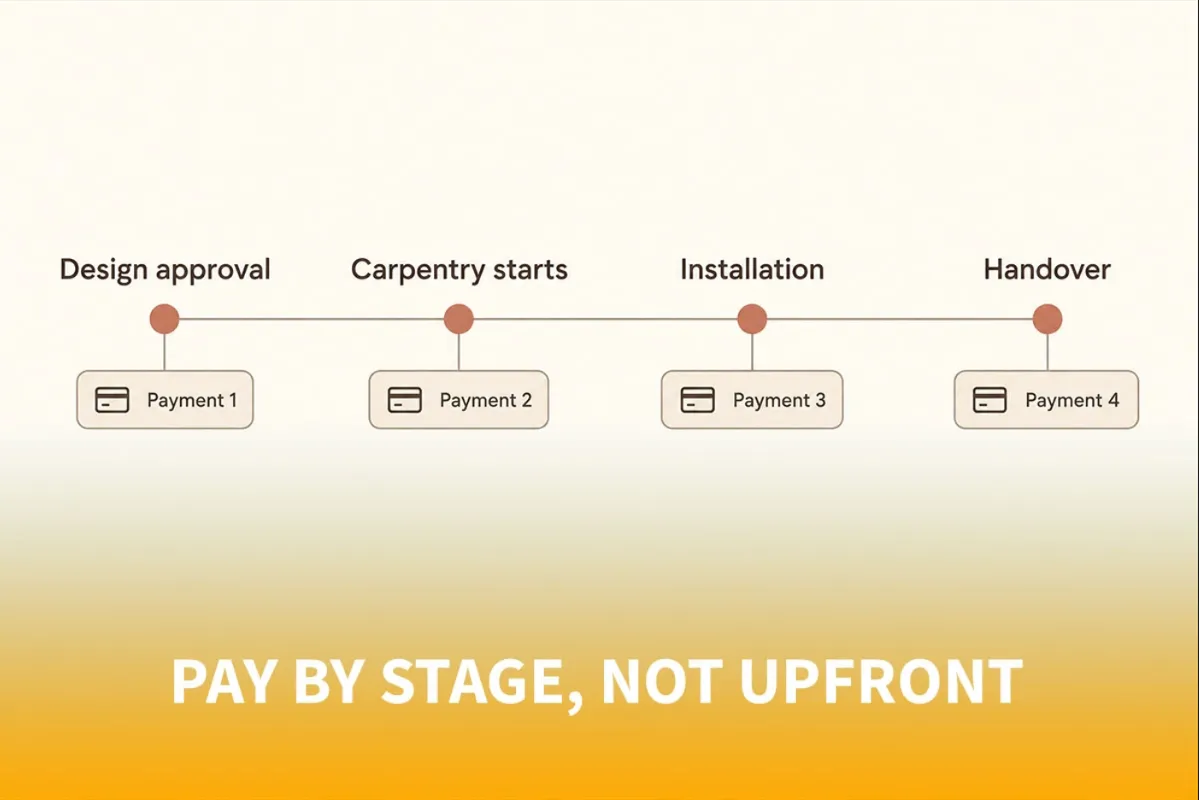
7. Look at the payment schedule.
Payments should follow the work. A sensible schedule ties each instalment to a stage, such as design approval, start of carpentry, installation and handover. Be careful if most of the money is asked for before any work begins. Get the schedule in writing and keep a receipt for every payment.
8. Ask about the timeline and the time after handover.
Get a start date, a handover date and what happens if the work runs late, all in writing. Then ask how updates will reach you. One point of contact, regular site photos and a clear way to raise a problem matter more than a long promise.
Also ask what happens after handover. What is covered, for how long, and who comes when a hinge loosens in the eighth month? If you are paying EMI and rent together while the flat is being done, a delay of a month or two costs real money, so this is worth being strict about.
Red Flags Worth Walking Away From
You do not need all of these to be true. One or two is usually enough reason to look at someone else.
• A final price given before anyone has seen the flat or taken measurements
• No completed home to visit and no past client you can speak to
• Vague answers on where the furniture is made and who supervises the site
• A large advance is asked for before any work starts
• Scope, timeline or warranty only promised on the phone
• Pressure to sign this week because of an offer that ends on Friday
Do Not Rush It
The pressure to hurry is real. Many buyers are paying EMI and rent together, and every week the flat stays empty feels like money lost. But a rushed hire usually costs more than a month of waiting. Meet at least three designers, ask all of them the same questions, and compare the answers once you are home and the meetings are over.
A Word on Dezinepro
Dezinepro has been working in Bangalore since 2004 and makes its modular furniture at its own manufacturing facility in Dasanapura. A project starts with a consultation and site measurement and a talk about budget and style, followed by a 3D design concept and a fixed-cost quote. If you are comparing interior designers in Bangalore, put the questions from this list to every firm on your shortlist, Dezinepro included.
In short,
Hiring well is not about finding the most expensive designer or the best-photographed one. It is about finding the one who asks about your home, shows you work that has held up, puts the scope in writing and picks up the phone when something goes wrong. Take this list to your first three meetings, and the right choice usually becomes obvious by the third.
FAQs
When should I hire an interior designer for a new home?
As early as you can, ideally before possession. Early involvement lets the designer suggest changes to electrical and plumbing points while they are still easy to make. Even if you already have the keys, hire before you start buying furniture.
What should I ask an interior designer before hiring?
Ask to see finished homes that are a couple of years old, where the furniture is made, who supervises the site, how payments are structured and what the warranty covers. Get the scope, timeline and warranty in writing.
How do I compare quotes from two interior designers?
Compare the scope before the price. Line up what each quote includes room by room, what is excluded and how changes after approval are charged. A quote that looks lower often leaves out items the other one has priced in.
Is it better to hire a designer who makes furniture in-house?
It is not a rule, but it gives you one point of responsibility for design, manufacturing and repairs. If a designer outsources the carpentry, ask who supervises it and who handles problems after handover.
How should I pay an interior designer?
Tie payments to stages like design approval, start of carpentry, installation and handover, and keep a receipt for each one. Be careful if a large part is asked for before any work begins.
About Dezinepro: Dezinepro is a Bangalore interior design company operating since 2004, with its own modular furniture manufacturing facility in Dasanapura. It covers modular kitchens, bedrooms, living rooms, wardrobes and full home interiors. Visit dezinepro.com to learn more.