

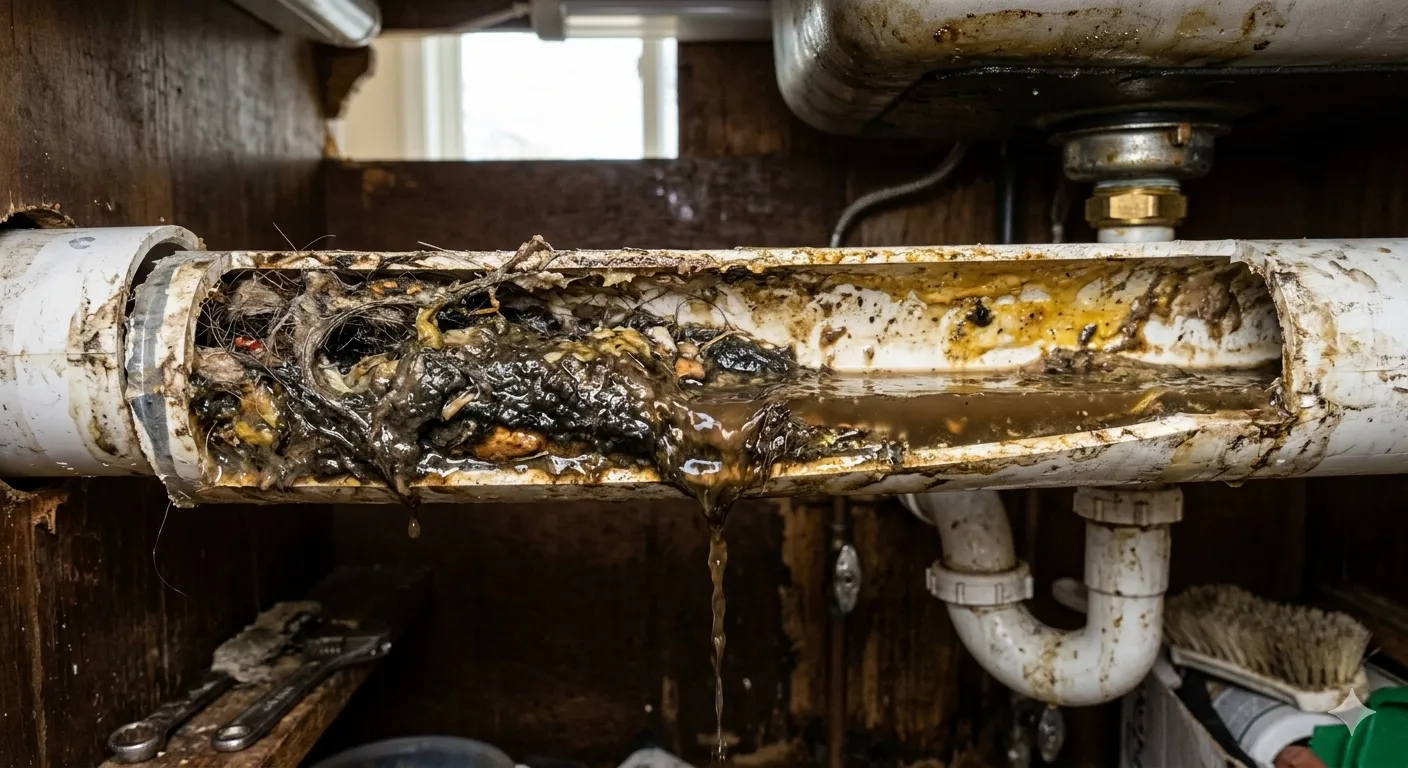
Water pooling around your ankles in the shower rarely appears without warning. Behind the gurgling noises and sluggish sinks, a slow buildup of grease, soap residue, hair, and mineral scale has usually been narrowing the pipe for months. Most people respond with a bottle of chemical liquid and move on, only to face the same trouble a few weeks later. Understanding what actually forms inside your lines makes it easier to choose a repair that lasts. Small changes now prevent expensive surprises later.
The Anatomy of a Clog
Every blockage has a recipe. In kitchens, warm grease slides down the pipe, cools, and hardens into a sticky coating that traps food particles. In bathrooms, hair knits together with soap scum until it forms a dense mat that catches everything else. Toilets suffer from wipes and paper products that refuse to break apart. Knowing which recipe applies to your home explains why the same quick fix works beautifully on one drain and fails on another. Matching tools to the material matters.
Why Store-Bought Liquids Disappoint
Caustic drain openers promise instant relief, but they usually burn a narrow tunnel through the blockage and leave the rest of the buildup clinging to the pipe walls. The water then drains for a few days before the channel closes again. Harsh chemicals can also soften older plastic fittings, damage protective coatings, and create dangerous splashes during a later repair. A plunger or a simple hand tool is gentler, and persistent problems deserve proper equipment instead of another bottle. Patience beats shortcuts.
Warning Signs Worth Taking Seriously
A single slow sink is an inconvenience, yet several symptoms together tell a bigger story. Gurgling from a toilet after you run the washing machine, water rising in a tub when someone flushes, or a sour sewer smell near a floor drain all point toward trouble deeper in the system. Those clues suggest a restriction in a shared line rather than a local clog, which means surface-level fixes will not reach the real source. Noting when symptoms began helps narrow the cause.
What Professional Equipment Can Do
When a plunger gives up, a dependable Drain Cleaning Service brings tools that homeowners rarely own. Motorized cable machines break through stubborn blockages, while high-pressure water jetting scrubs pipe walls clean instead of drilling a small hole. Small waterproof cameras then travel through the line so the technician can show you exactly what caused the problem. Seeing the pipe interior removes guesswork and helps you approve only the work your plumbing truly needs. That clarity is especially valuable in older properties.
Roots, Age, and Hidden Damage
Tree roots are patient hunters. They detect moisture escaping through tiny joints in buried sewer lines, push inside, and expand into thick webs that catch every passing scrap. Clay and cast iron pipes installed decades ago are especially vulnerable, since their seams loosen and their surfaces roughen over time. A camera inspection after repeated backups can reveal cracks, sagging sections, or intruding roots, giving you evidence to plan a targeted repair instead of cleaning the same line each year. Early detection saves excavation.
Daily Habits That Keep Lines Open
Prevention costs almost nothing. Pour cooking fat into a jar and throw it away with the trash, scrape plates before washing, and fit mesh strainers over every sink and shower opening. Treat the garbage disposal as a helper for tiny scraps, not a trash can. Remember that so-called flushable wipes behave like cloth in your pipes. Running hot water for a minute after washing dishes helps carry loosened residue farther along the line. Consistency matters more than perfection, since small efforts slow buildup.
When a Backup Becomes a Health Matter
Sewage that returns through a floor drain or tub is not simply messy; it carries bacteria that can make families ill. Stop using water immediately, keep children and pets away, and avoid touching the liquid with bare hands. Open windows for ventilation and photograph affected areas before cleanup begins. Prompt professional attention limits how far contaminated water spreads, protects flooring and drywall, and gives you the documentation an insurer may request later. Disinfect hard surfaces afterward and let everything dry completely before returning.
Final Thoughts on Healthy Pipes
A clear drain is the result of small, consistent decisions rather than luck, from what you pour down the sink to how quickly you respond to the first gurgle. If a stubborn blockage or repeated backup keeps returning, Definitive Mechanical provides residential and commercial plumbing across Maryland, DC, and Northern Virginia, with licensed technicians ready when trouble strikes. Stay observant, protect your pipes daily, and call for help before a small slowdown becomes a flooded floor. Healthy drains protect your whole home.